
1952–2017 · San Francisco’s 43rd mayor
Edwin M. Lee
San Francisco’s first Asian American mayor. A former tenants’ rights lawyer who spent two decades in city government before taking office in 2011.
1952–2017 · San Francisco’s 43rd mayor
San Francisco’s first Asian American mayor. A former tenants’ rights lawyer who spent two decades in city government before taking office in 2011.
Ed Lee’s path to City Hall began far from elected office: in Seattle public housing, then in Chinatown defending tenants, and later in the city departments that keep San Francisco running.
Our club began in 1992 as the Asian Pacific Democratic Club. On January 23, 2018, following Lee’s death, it became the Edwin M. Lee Asian Pacific Democratic Club. His life connects our work for Asian American representation with a broader question: who gets the chance to serve and shape the city?
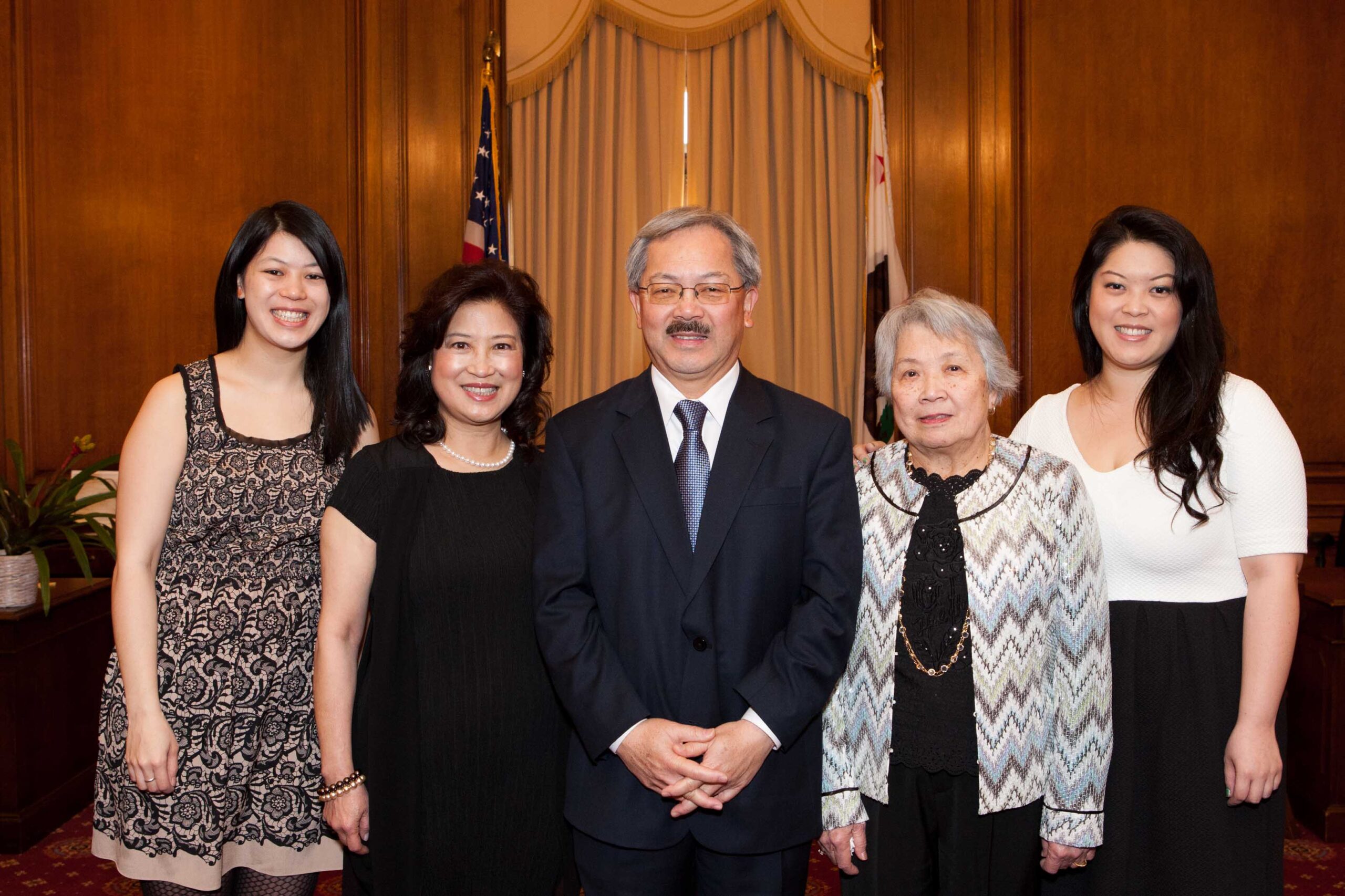
With Anita, Tania, Brianna and Pansy Lee on Inauguration Day.
Chapter I · 1952–1989
From public housing in Seattle to the tenants of Chinatown.
Ping Yuen, the Chinatown public housing complex where Lee represented tenants. Photo: Horatio Jung
1952
Seattle → Berkeley
Born in Seattle on May 5, 1952, Edwin Mah Lee was one of six children of parents who had immigrated from Taishan, China. His father worked as a cook and died when Ed was 15. His mother supported the family as a seamstress and waitress. He grew up in public housing: homes supported by government funding for lower-income families.
He graduated from Franklin High School and Bowdoin College, earning his college degree in 1974. After a year abroad as a Watson Fellow, he earned his law degree at UC Berkeley in 1978.
1977
Asian Law Caucus
At the Asian Law Caucus, a civil rights legal organization, Lee represented tenants and immigrant families. His early work included the fight against displacement at the International Hotel in 1977, home to elderly Filipino and Chinese tenants.
In 1978, he represented residents of Ping Yuen, a Chinatown public housing complex. Tenants withheld rent to protest unsafe, neglected conditions. Years later, as mayor, he worked on rebuilding the same public housing system.
Chapter II · 1989–2011
Two decades inside city government, from whistleblower investigator to City Administrator.
Carrying the Olympic torch through San Francisco as City Administrator, April 2008.
Lee joined city government in 1989 as its first investigator under a new whistleblower law, which gave people a way to report wrongdoing. He went on to lead departments responsible for civil rights, city purchasing and public works.
1989
First investigator under the city’s new whistleblower law
1991–1996
Executive Director, Human Rights Commission
Late 1990s
Director of City Purchasing
2000
Director of Public Works
2005–2011
City Administrator, overseeing core city operations
2011
First Asian American mayor
When Mayor Gavin Newsom left to become California’s lieutenant governor, the Board of Supervisors—San Francisco’s legislative body—selected Lee as interim mayor. He was sworn in on January 11, 2011, becoming the first Asian American to hold the city’s top office.
Lee initially said he would not seek a full term. Supporters led by Chinatown organizer Rose Pak urged him to run. He entered the race in August and won that November. San Francisco uses ranked-choice voting, in which voters rank candidates in order of preference. Lee won after the counting rounds and was re-elected in 2015.
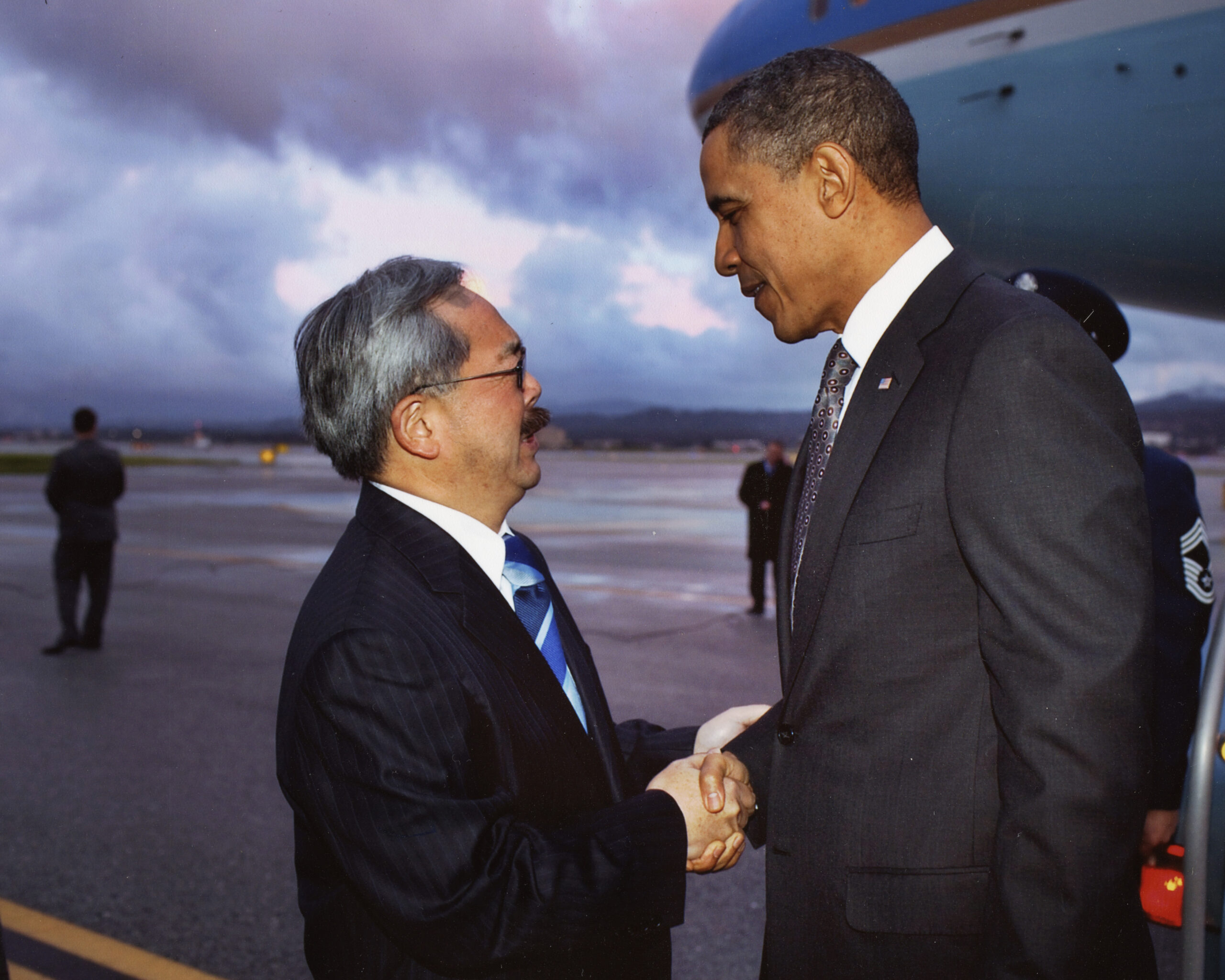
Welcoming President Barack Obama to San Francisco.
“He focused on problem solving. He was pragmatic. He had no interest in political games.”
— Anita, Tania & Brianna Lee · Mayor Lee & the City He Loved, pp. 2–7
Chapter III · 2011–2017
Lee served from 2011 until his death in 2017. These results came from work with voters, supervisors, city staff, community organizations and other partners.
Signing legislation at a public library.
Figures as reported in the administration’s retrospective, Mayor Lee & the City He Loved.
The minimum wage, 2014–2018
A minimum wage is the legal hourly pay floor. In 2014, San Francisco’s standard rate was $10.74 an hour. That November, voters approved a plan championed by Lee and members of the Board of Supervisors to reach $15 by July 2018.
That was a $4.26 hourly increase over the 2014 rate—about 40%, before accounting for inflation—phased in over several years. The national federal minimum was $7.25, so the city’s $15 goal was more than twice that amount.
Historical sources: San Francisco wage rates, 2014 Proposition J, and federal wage history.
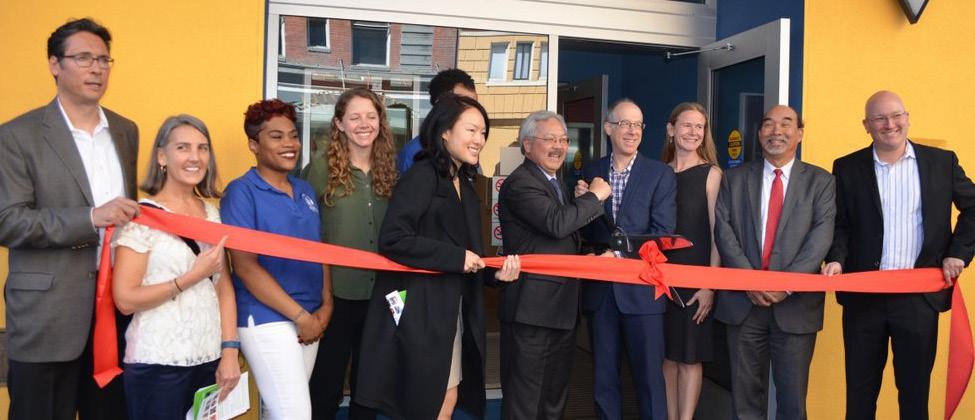
At a housing opening. Photo from the book’s housing chapter, p. 16.
19,000
homes built or rehabilitated
Rising housing costs made it harder for lower- and middle-income residents to stay in San Francisco. Lee’s administration reported nearly 19,000 homes built or rehabilitated, including 6,430 permanently affordable homes: homes with rents or prices restricted to serve eligible households.
California’s closure of redevelopment agencies removed a major source of housing funding. In 2012, Lee helped secure voter approval for a Housing Trust Fund, committing about $1.3 billion over 30 years. Public housing repairs, the HOPE SF rebuilding initiative and the Small Sites Program addressed existing homes as well as new construction. The DAHLIA online portal brought affordable listings and applications into one place.
Source: Mayor Lee & the City He Loved, pp. 14–19.
Context: 2012 Planning Department explanation of the Housing Trust Fund.
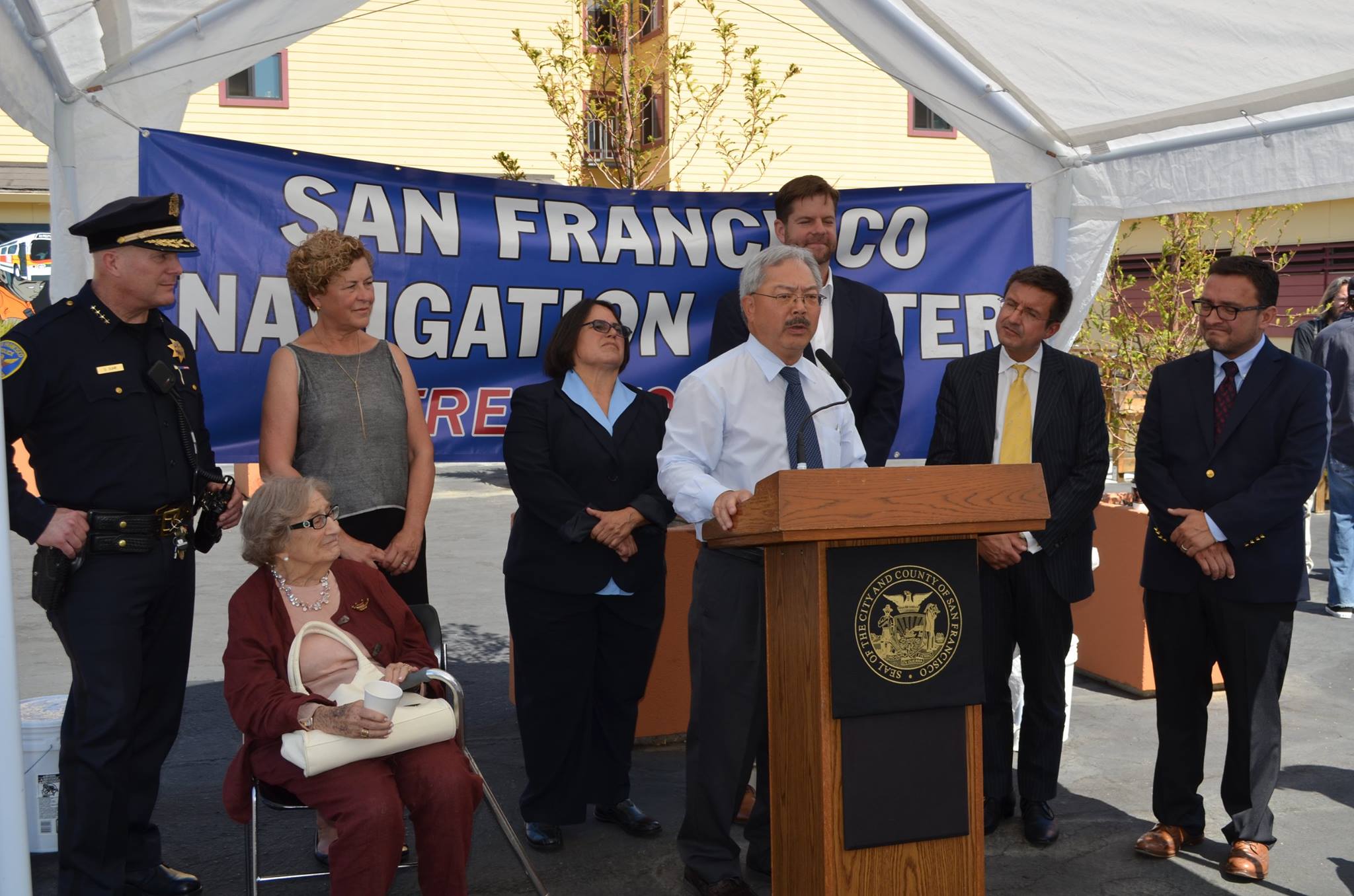
Opening San Francisco’s first Navigation Center in 2015.
75%
more funding for homeless services
Traditional shelter rules could force people to separate from a partner, leave a pet behind or give up belongings. The first Navigation Center, opened in 2015, allowed people to bring partners, pets and possessions. Staff helped residents access services and work toward housing.
Lee also created the Department of Homelessness and Supportive Housing to bring related programs and funding together. Jazzie’s Place offered an LGBTQ adult shelter, while Hummingbird Place served people with behavioral health needs.
Source: Mayor Lee & the City He Loved, pp. 20–25.
How the model differed: San Francisco Public Works on Navigation Centers.
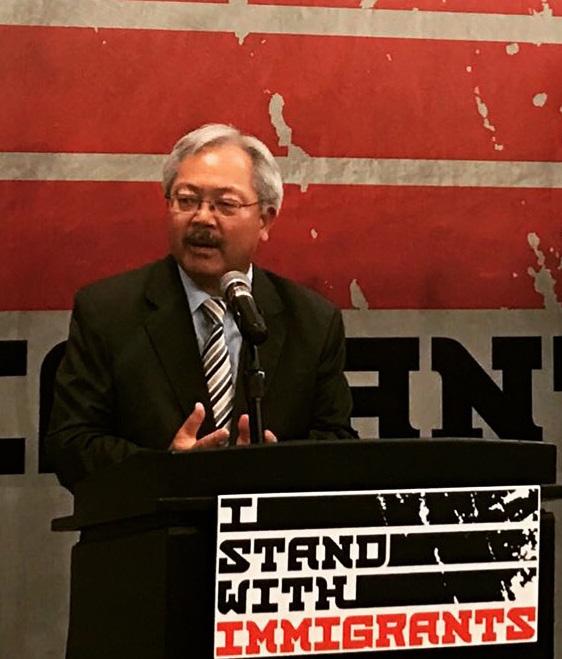
Standing with immigrant communities. Photo from the book, p. 57.
8,500
new U.S. citizens
Lee’s work as a civil rights lawyer continued into his time as mayor. Through Pathways to Citizenship, 8,500 residents became U.S. citizens, opening the way for them to vote and participate more fully in civic life.
He defended San Francisco’s Sanctuary City policies, which limit the city’s role in federal immigration enforcement. He created the Office of Transgender Initiatives, founded a coalition of more than 300 mayors against LGBTQ discrimination, and replaced $5 million in lost federal HIV/AIDS funding with city support.
Source: Mayor Lee & the City He Loved, pp. 58–63.
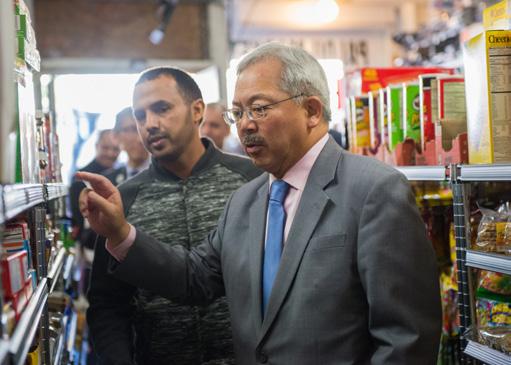
Visiting a neighborhood business. Photo from the book, p. 9.
9.6% → 2.3%
unemployment, 2011 to 2017
Lee took office after the Great Recession, a national economic downturn that cost jobs and strained public budgets. San Francisco’s unemployment rate was 9.6% in January 2011—nearly one in ten people in its workforce. By November 2017 it was 2.3%.
During his administration the city added 145,000 jobs. TechSF and CityBuild helped residents train for work in technology and construction, while Invest in Neighborhoods supported local shopping streets.
Source: Mayor Lee & the City He Loved, pp. 8–12.
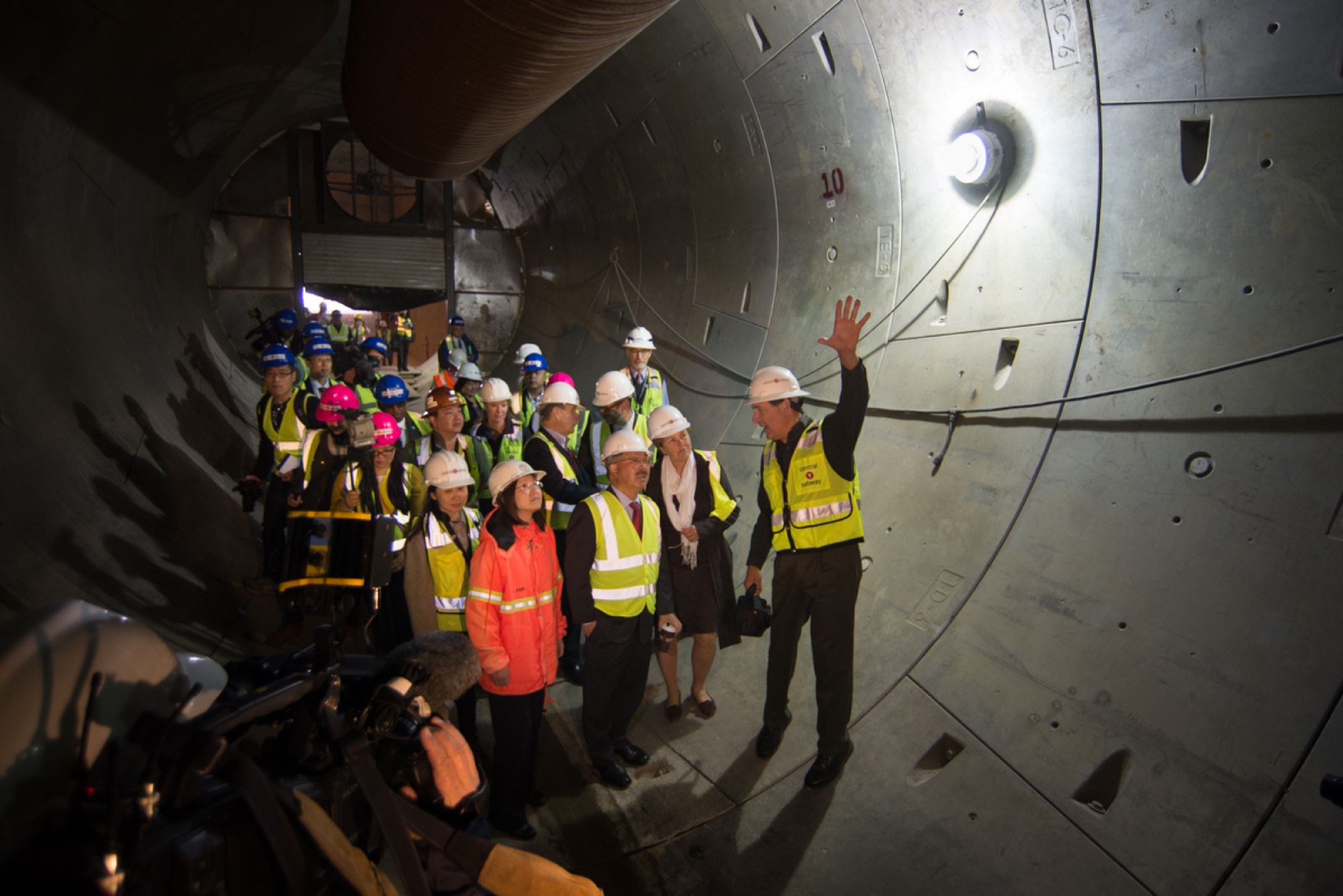
Touring Central Subway construction, 2015.
$2B+
in voter-approved bonds
Residents rely on city infrastructure every day, even when it is out of sight: hospital buildings, water systems, streets and emergency facilities. Voters approved more than $2 billion in bonds during Lee’s administration to help pay for long-term public projects.
Work included rebuilding San Francisco General Hospital and transportation and earthquake-safety investments. CleanPowerSF launched in 2016 to offer cleaner electricity. The administration’s retrospective reports a 26% reduction in citywide emissions during his time in office.
Source: Mayor Lee & the City He Loved, pp. 32–44.
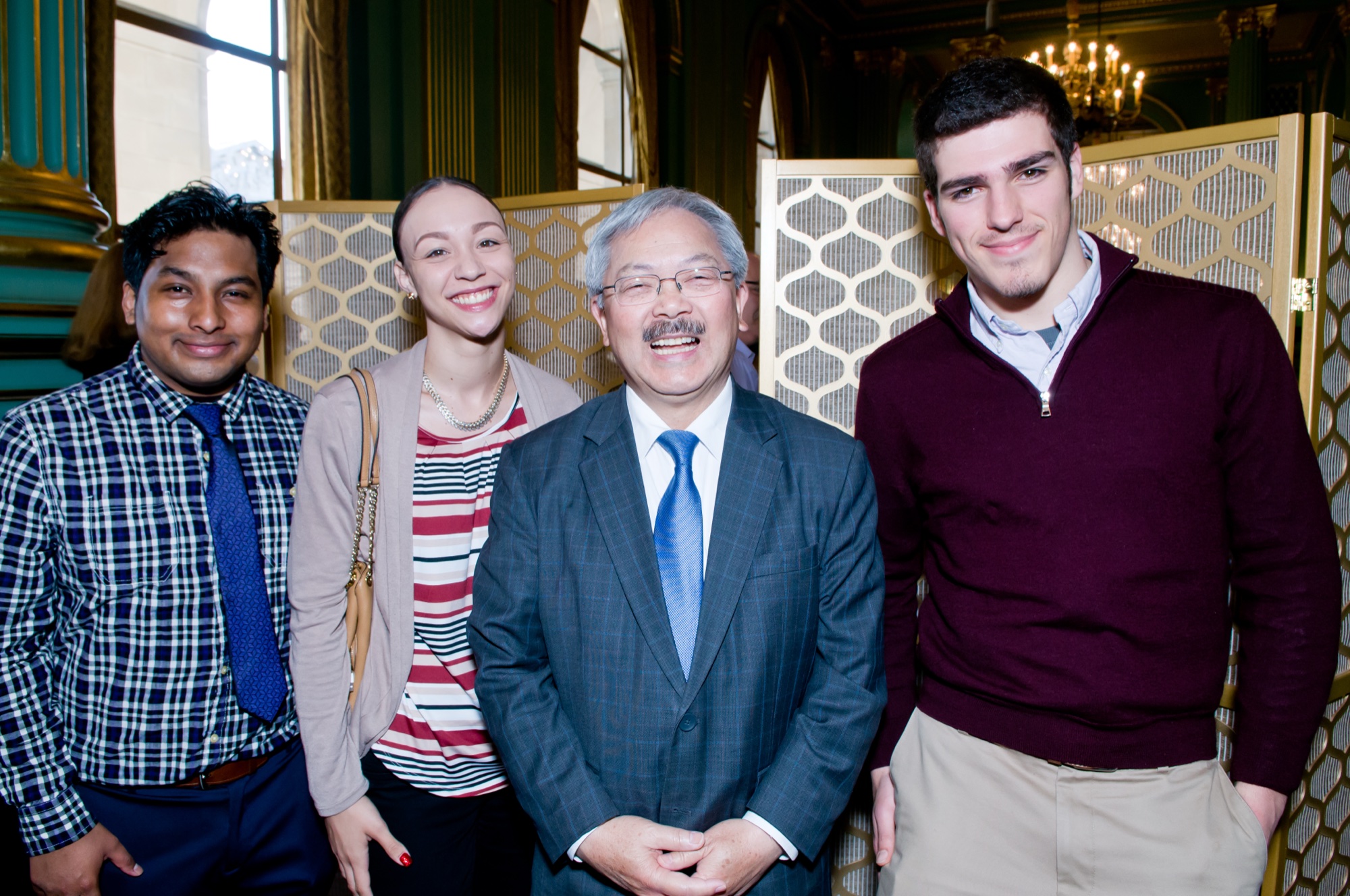
With Youth Jobs+ participants.
41,000
young people in Youth Jobs+
In 2017, Lee and Supervisor Jane Kim reached an agreement to make City College tuition free for eligible San Francisco residents, with extra assistance for lower-income students.
Youth Jobs+ helped nearly 41,000 young people prepare for work through paid jobs and internships. A partnership with Salesforce.org invested nearly $34 million in middle-school science and technology education. The voter-approved Dignity Fund set aside support for older adults and people with disabilities to access services and remain in their communities.
Source: Mayor Lee & the City He Loved, pp. 52–57.
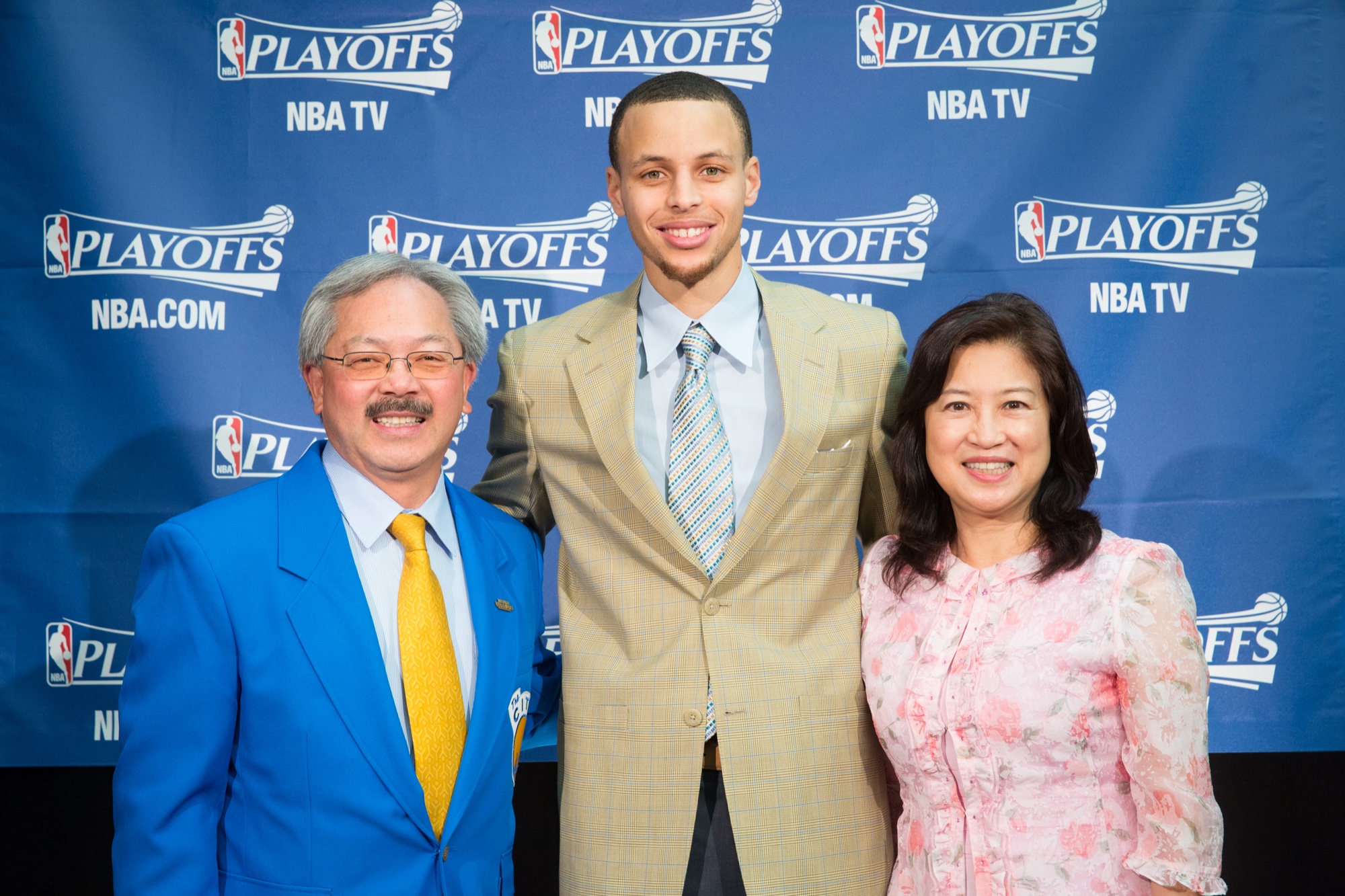
Celebrating Warriors Day.
1971 → 2019
the Warriors come home
Lee championed the Golden State Warriors’ return to San Francisco and the development of Chase Center in Mission Bay. He died before the arena opened in 2019, when the team returned to the city for the first time since 1971.
Ballot measures, 2011–2017
San Francisco voters can make policy directly through ballot measures, usually called propositions. A bond authorizes the city to borrow for public projects and repay the debt over time. Other propositions change taxes, funding rules or city law.
Lee brought labor, business and community groups together around proposals. According to the administration’s retrospective, 13 of the 14 measures he championed from 2011 through 2016 passed. The bars below show the share of voters who said yes, where reported.
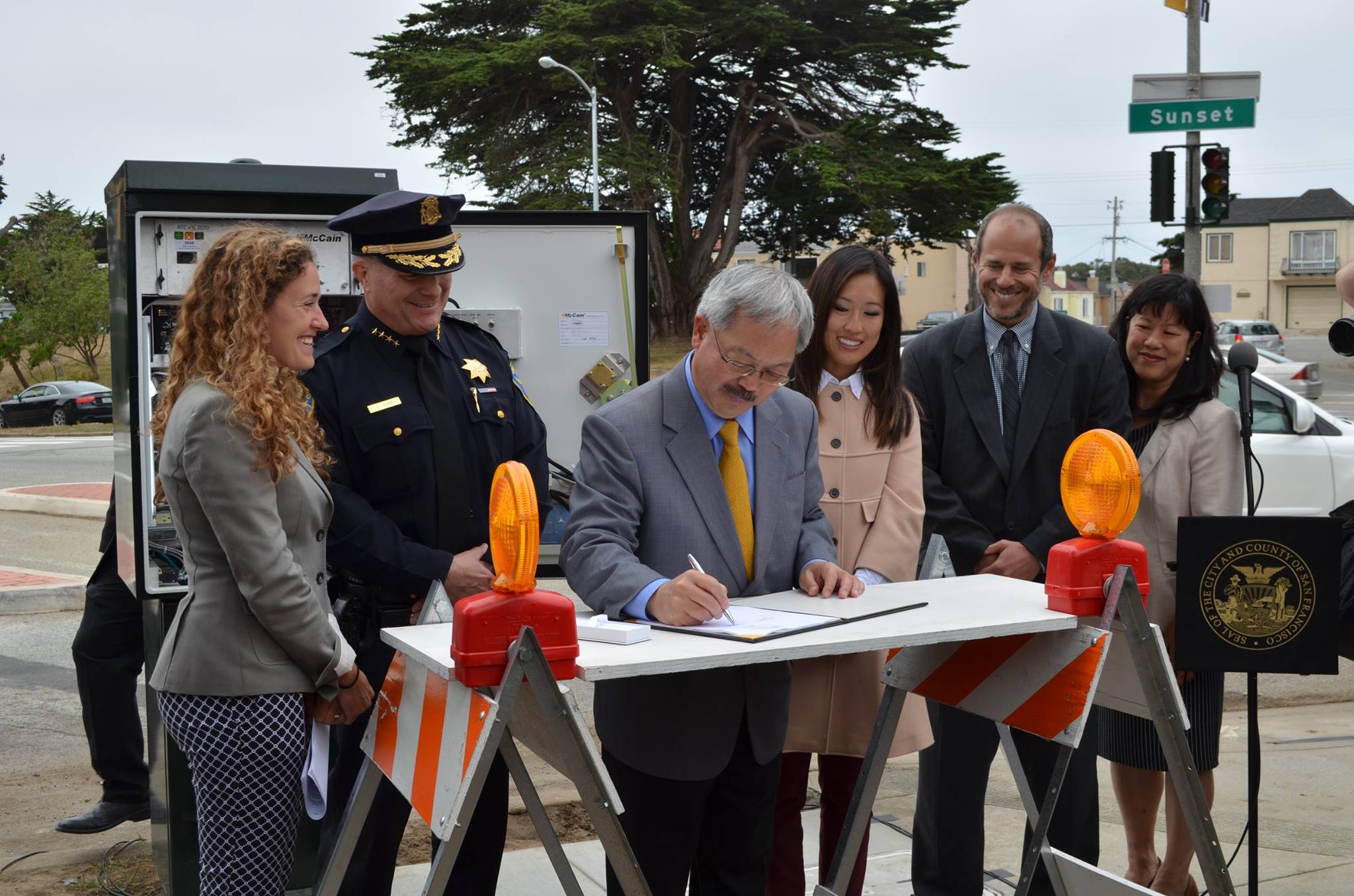
Signing the Transportation Bond, 2014.
2011
Streets and pensions
Prop B, Road Repaving & Street Safety Bond: $248M to repave streets and improve street safety. Passed (needed two-thirds).
Prop C, Pension reform: Changed how the city and its workers contribute to employee retirement benefits; negotiated with City unions with help from Warren Hellman. Passed.
2012
The Housing Trust Fund
Prop C, Housing Trust Fund: Created a 30-year, ~$1.3B dedicated fund for affordable housing after redevelopment agencies were dissolved. Passed.
Prop E, Gross Receipts Tax: Shifted business taxation from payroll (what employers pay workers) toward gross receipts (business revenue). Passed.
2014
A $15 minimum wage and safer streets
Prop A (June), Earthquake Safety & Emergency Response Bond: $400M for firehouses, the emergency water system, police stations, and the crime lab. Passed.
Prop A (Nov), Transportation Bond: $500M for Muni and street safety. Passed.
Prop J, Minimum Wage: Raised San Francisco’s minimum wage to $15 by 2018, one of the first U.S. cities to commit to $15. Passed.
Prop K, Affordable Housing Policy: Set the goal of 30,000 homes by 2020, at least one-third affordable. Passed.
2015
The Affordable Housing Bond
Prop A, Affordable Housing Bond: $310M for public housing rehab and new affordable homes. Passed.
2016
Health, housing and statewide $15
Prop A (June), Public Health & Safety Bond: $350M to rebuild SF General’s facilities, community clinics, homeless shelters, and fire stations, co-led with Board President London Breed. Passed.
Prop C (June), Inclusionary Housing: Required certain new housing developments to make 25% of their on-site homes affordable to eligible households. Passed.
Prop I (Nov), Dignity Fund: Guaranteed funding for seniors and adults with disabilities. Passed.
Props J & K (Nov), Homelessness & Transportation: J set aside the funds and passed; K, the sales tax to pay for them, failed.
Statewide minimum wage: Co-chaired the campaign with Oakland Mayor Libby Schaaf. California passed SB 3 in 2016, setting a phased path from the then-statewide $10 rate to $15—scheduled for 2022 at larger employers and 2023 at smaller ones. Read the 2016 announcement.
2017
Free City College
Free City College: After voters passed Prop W, he and Supervisor Jane Kim reached a deal that made City College of San Francisco tuition-free for eligible San Francisco residents.
Source: Mayor Lee & the City He Loved, pp. 8–63.
Opening doors
A mayor can appoint people to some vacant offices and endorse candidates in elections. Lee used both roles to support other leaders. An appointment gave someone the chance to serve; voters still decided the elections that followed.
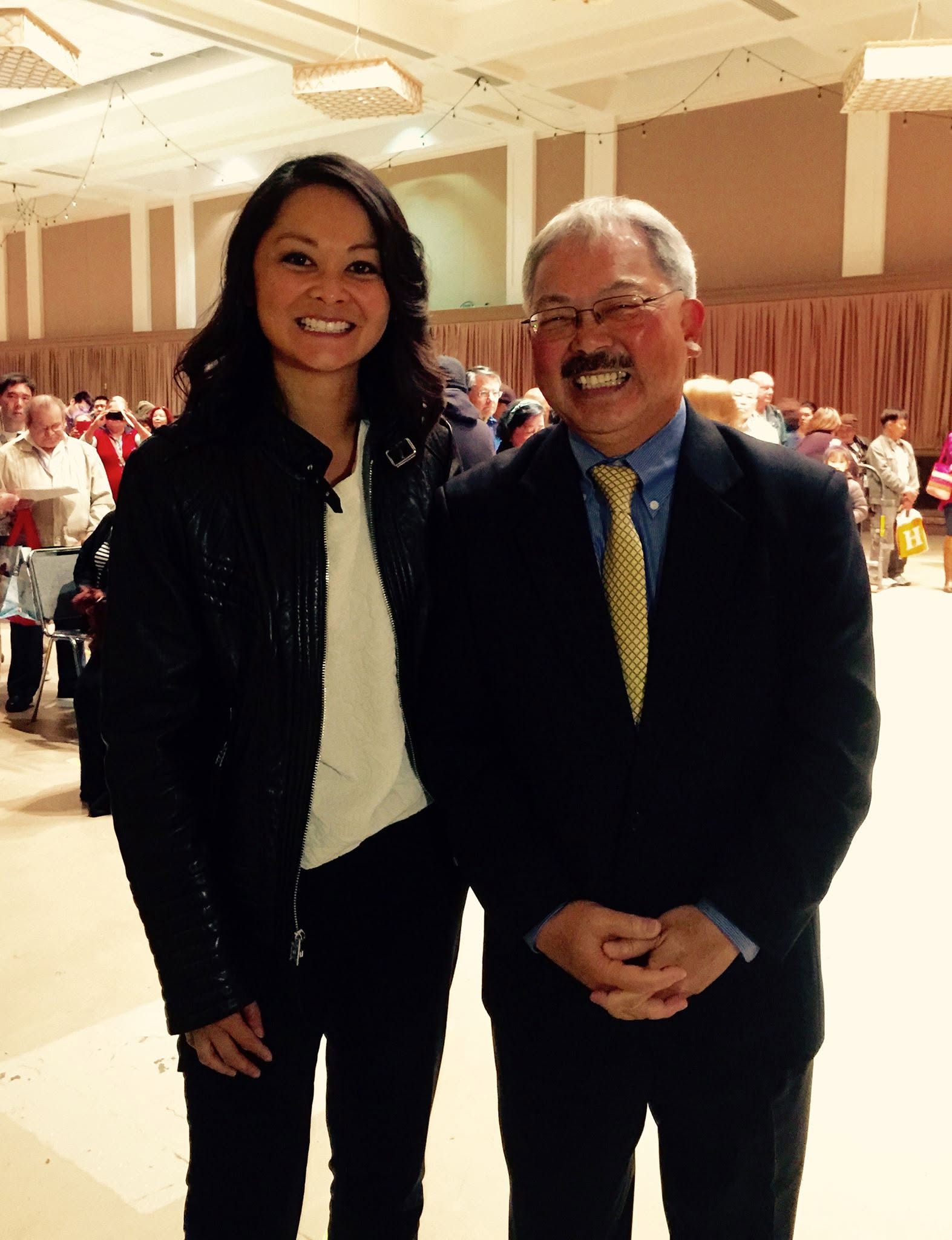
Assessor-Recorder · 2013
Appointed Assessor-Recorder in February 2013, then won the seat in her own right. She later became City Administrator and opened the 2025 ceremony unveiling his bust.
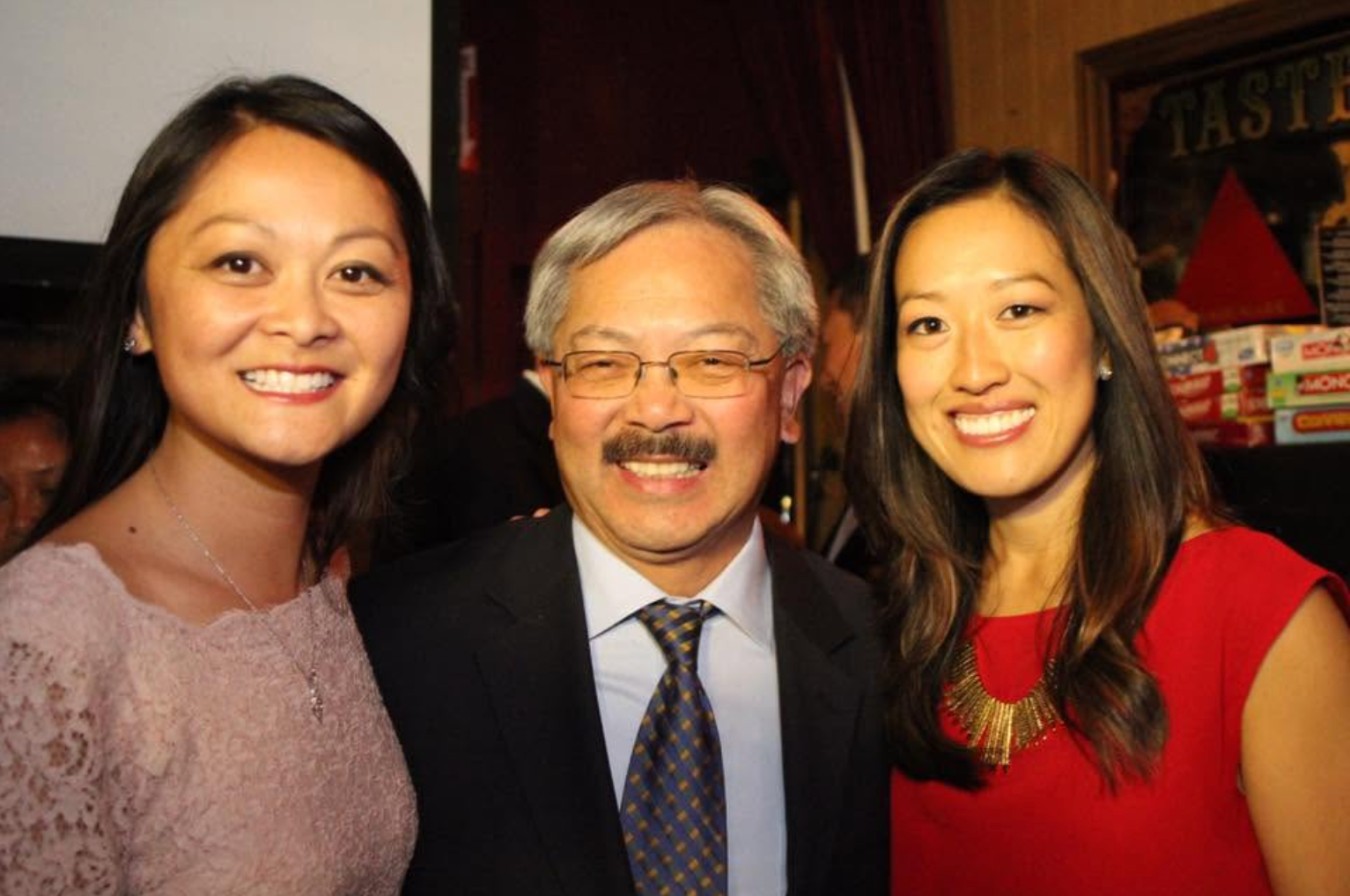
District 4 Supervisor · 2013
Appointed to represent the Sunset in February 2013; she won her election that November with about 80% of the vote.
“I’ll always be grateful to him for giving me the opportunity to serve this incredible city.”
Katy Tang, Dec. 12, 2017 · Photo: Katy Tang on Facebook
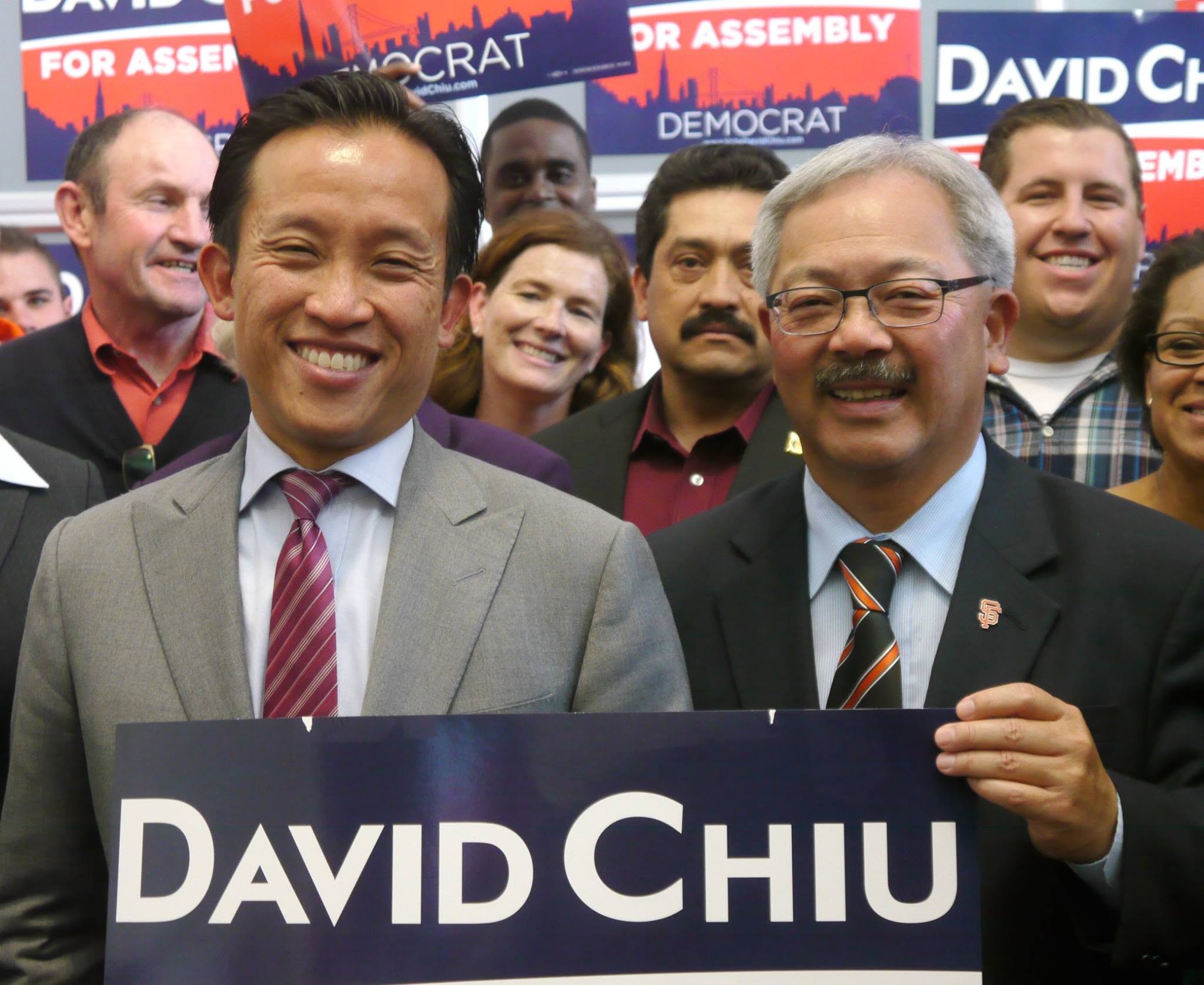
State Assembly · 2014
Mayor Lee endorsed Board of Supervisors President David Chiu for the 17th Assembly District in 2014. Chiu won, and later became San Francisco City Attorney.
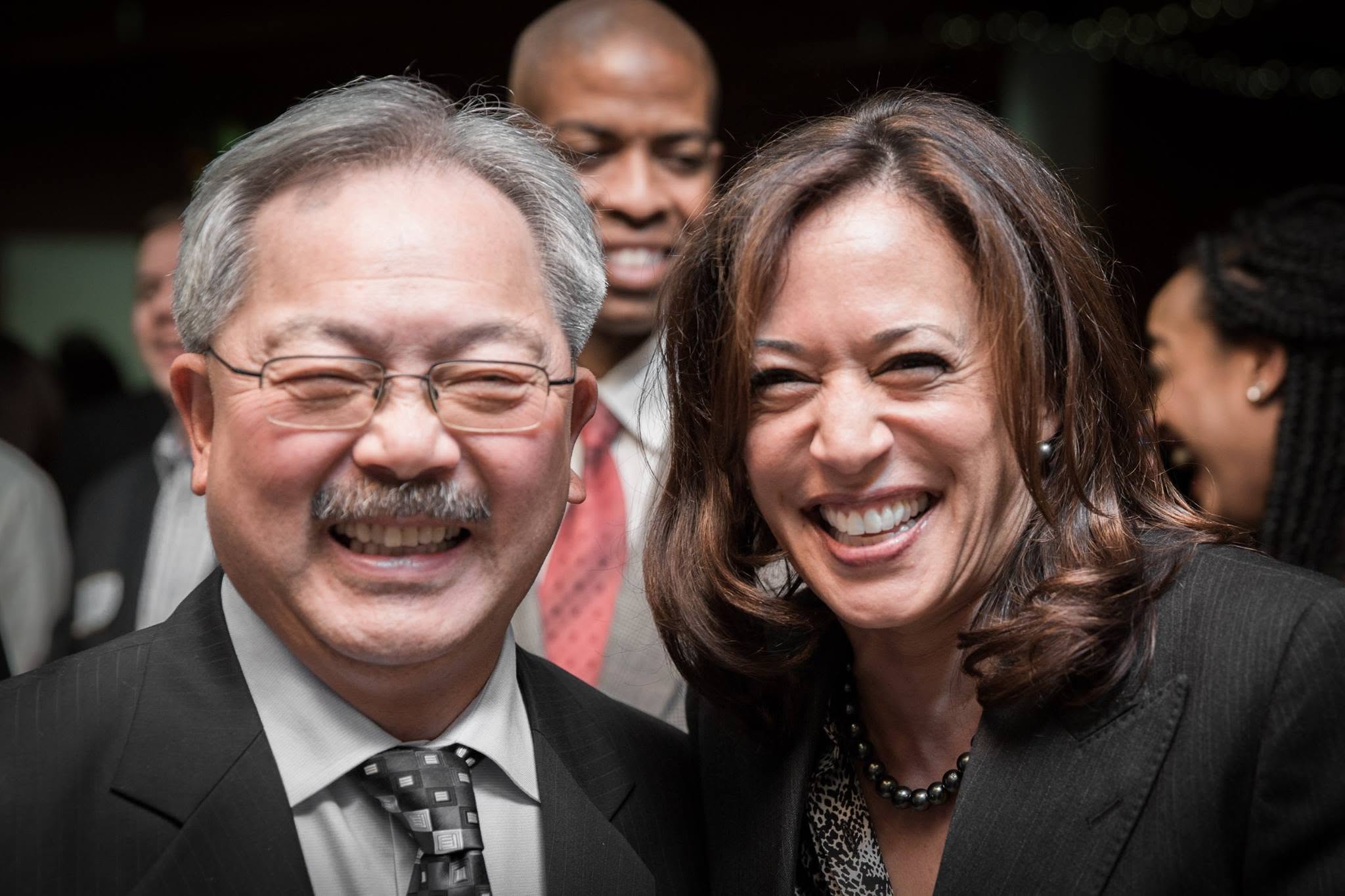
U.S. Senate · 2016
Mayor Lee endorsed San Francisco’s former District Attorney for the U.S. Senate in 2016. Harris won, and later became Vice President of the United States.
“He was a fierce advocate for civil rights and worked tirelessly for workers’ rights and his leadership will be missed.”
Kamala Harris, Dec. 12, 2017 · Photo: Kamala Harris on Facebook
Lee also appointed Vicki Hennessy interim sheriff in 2012. She later won election as sheriff.
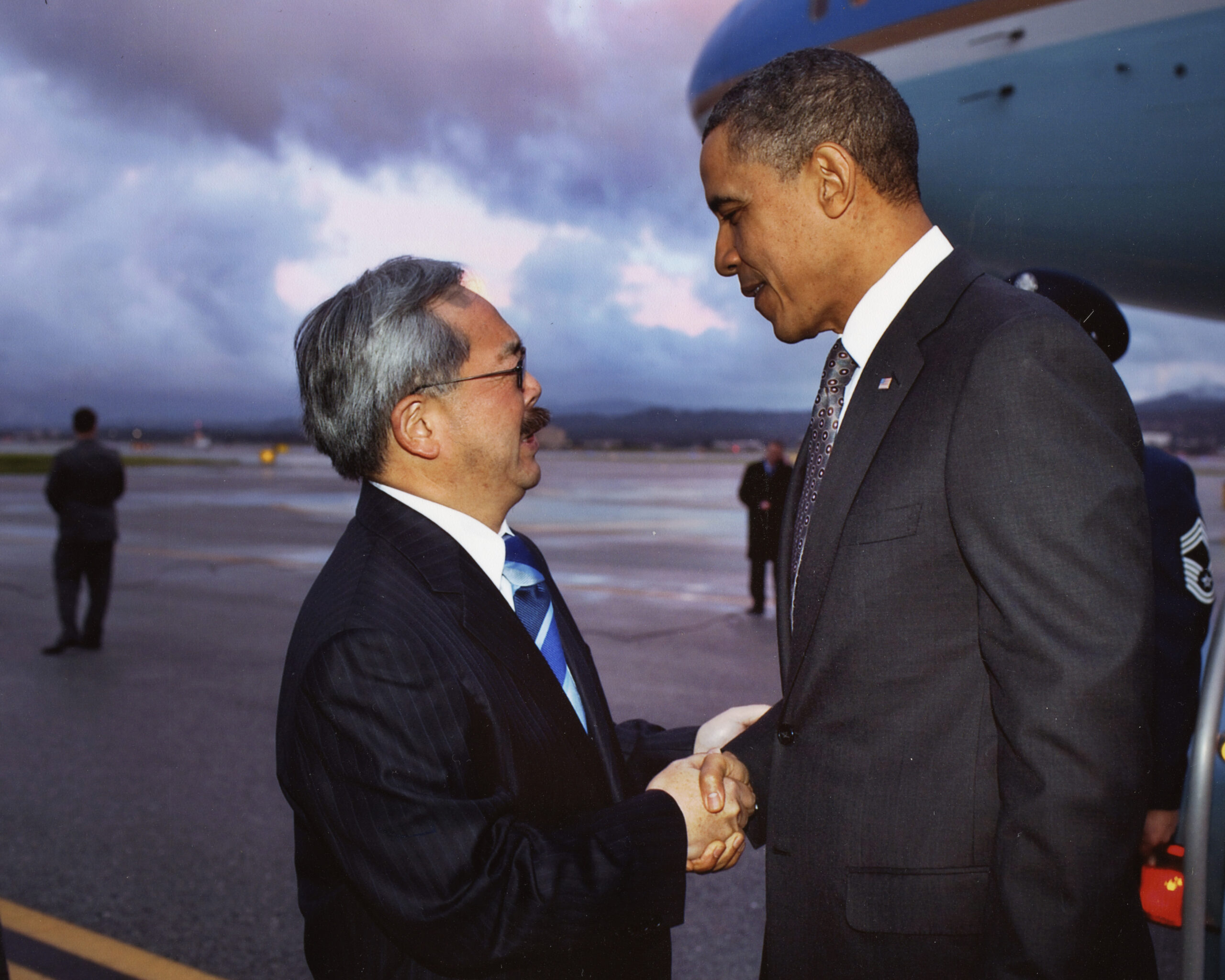
President Barack Obama arrives at SFO and walks with Mayor Lee, Oct. 25, 2011
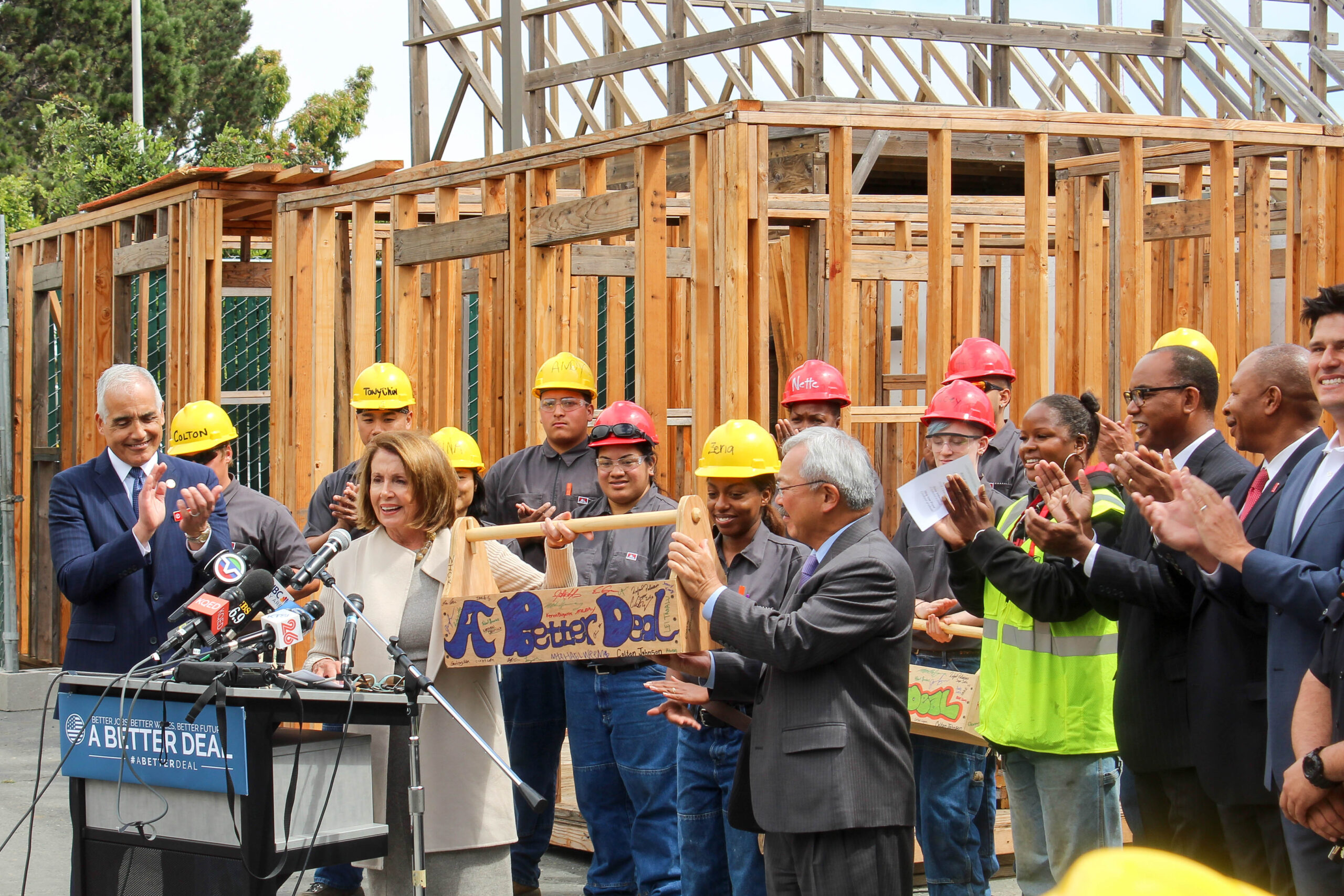
With House Democratic Leader Nancy Pelosi and building trades workers, 2017
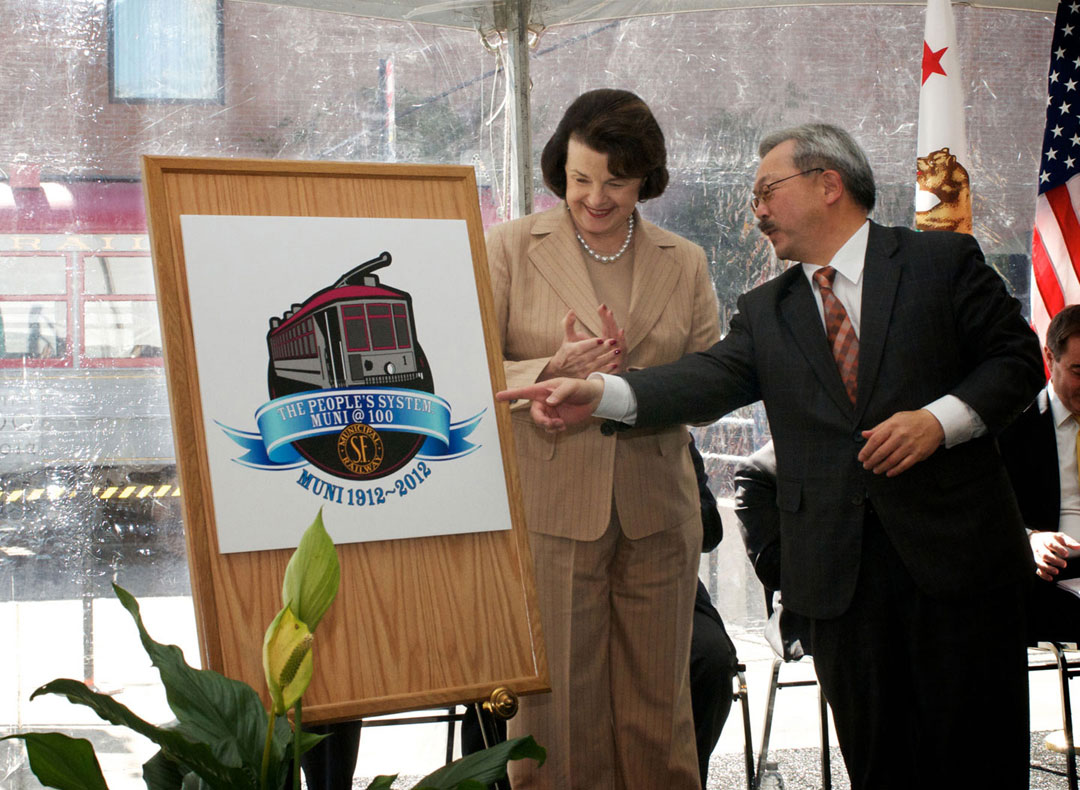
Unveiling Muni’s centennial logo with Sen. Dianne Feinstein, 2012
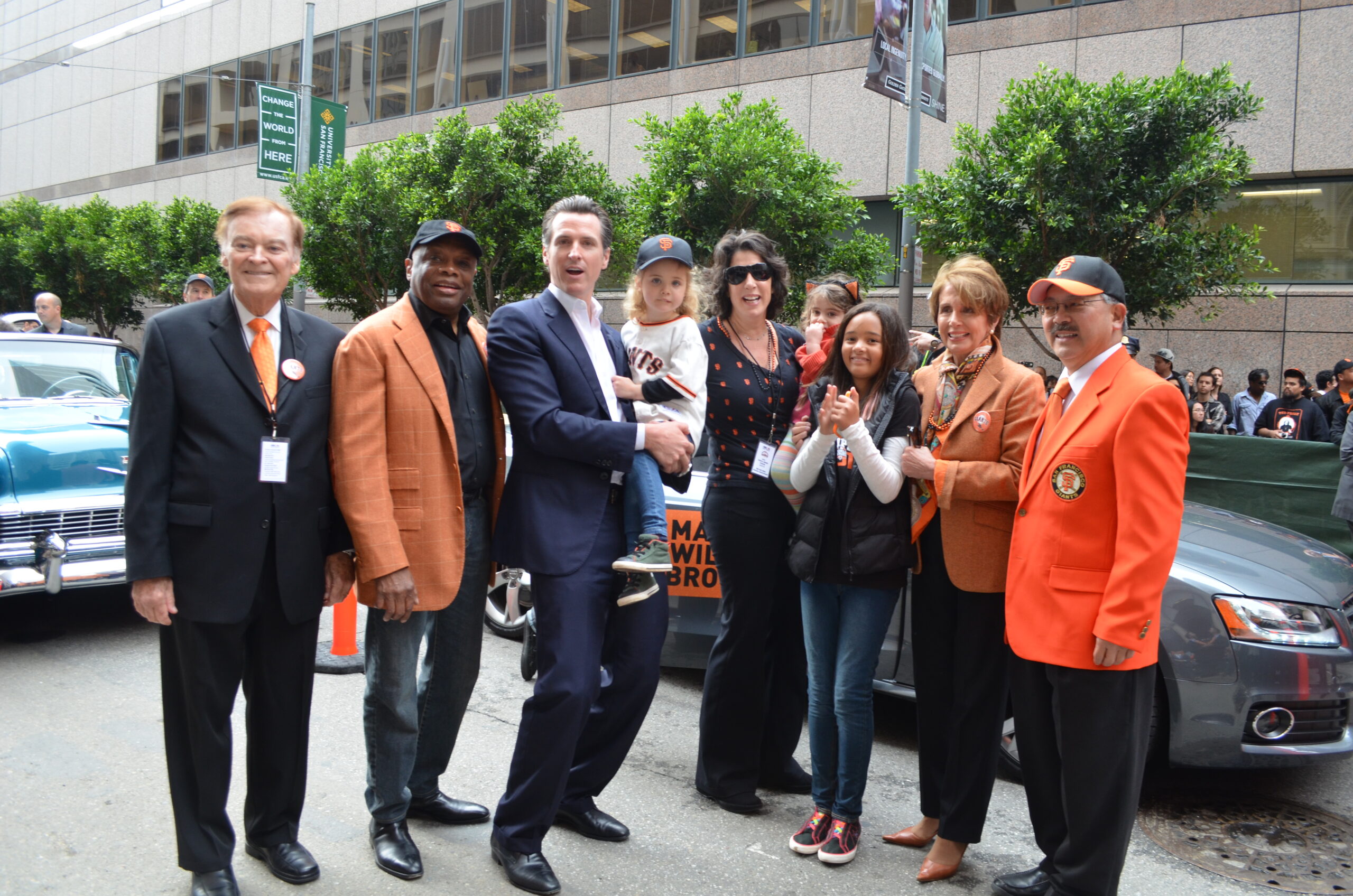
Celebrating the Giants with former Mayors Frank Jordan, Willie Brown and Gavin Newsom, Christine Pelosi and Nancy Pelosi
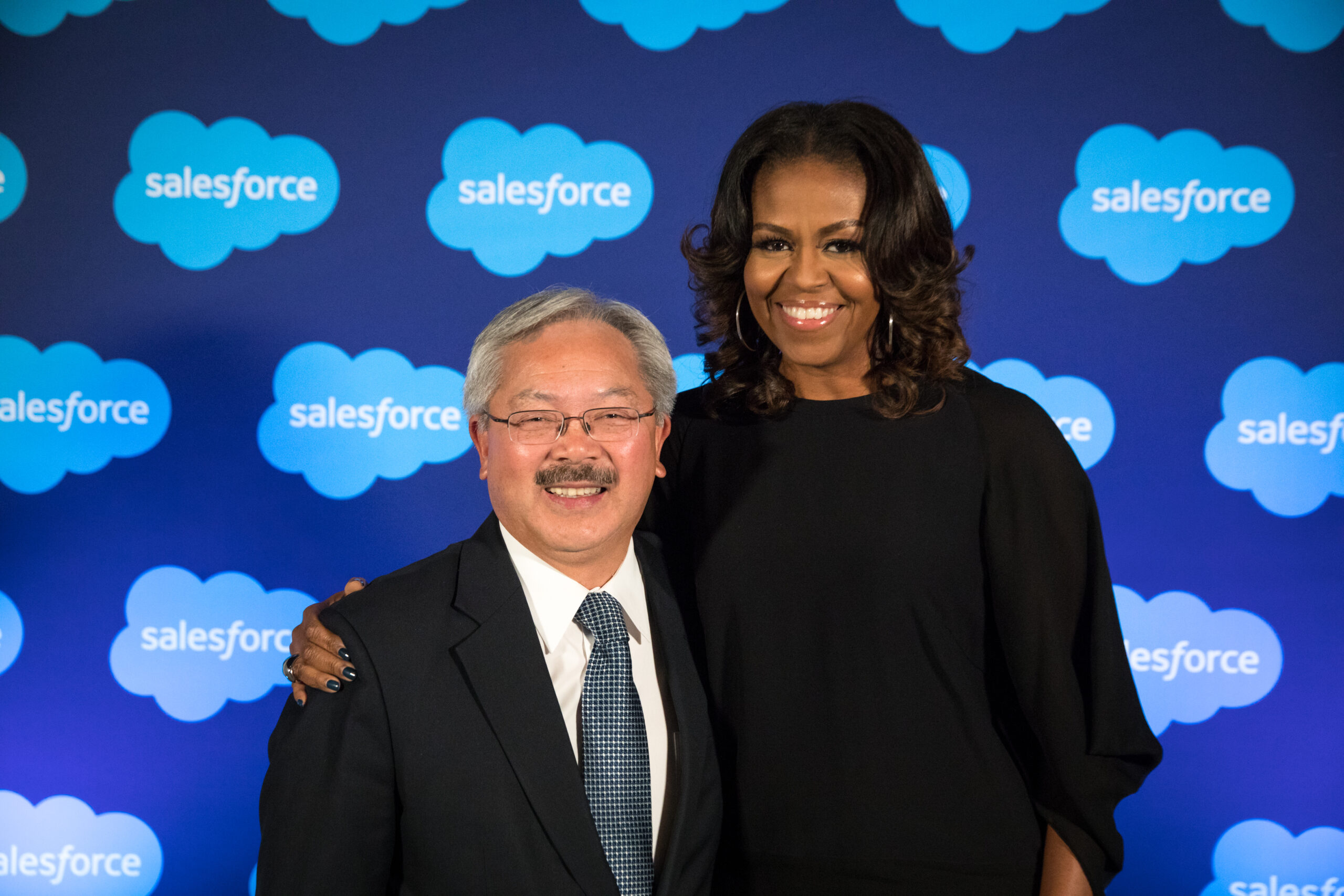
With former First Lady Michelle Obama at Dreamforce 2017 · Photo: Jakub Mosur Photography
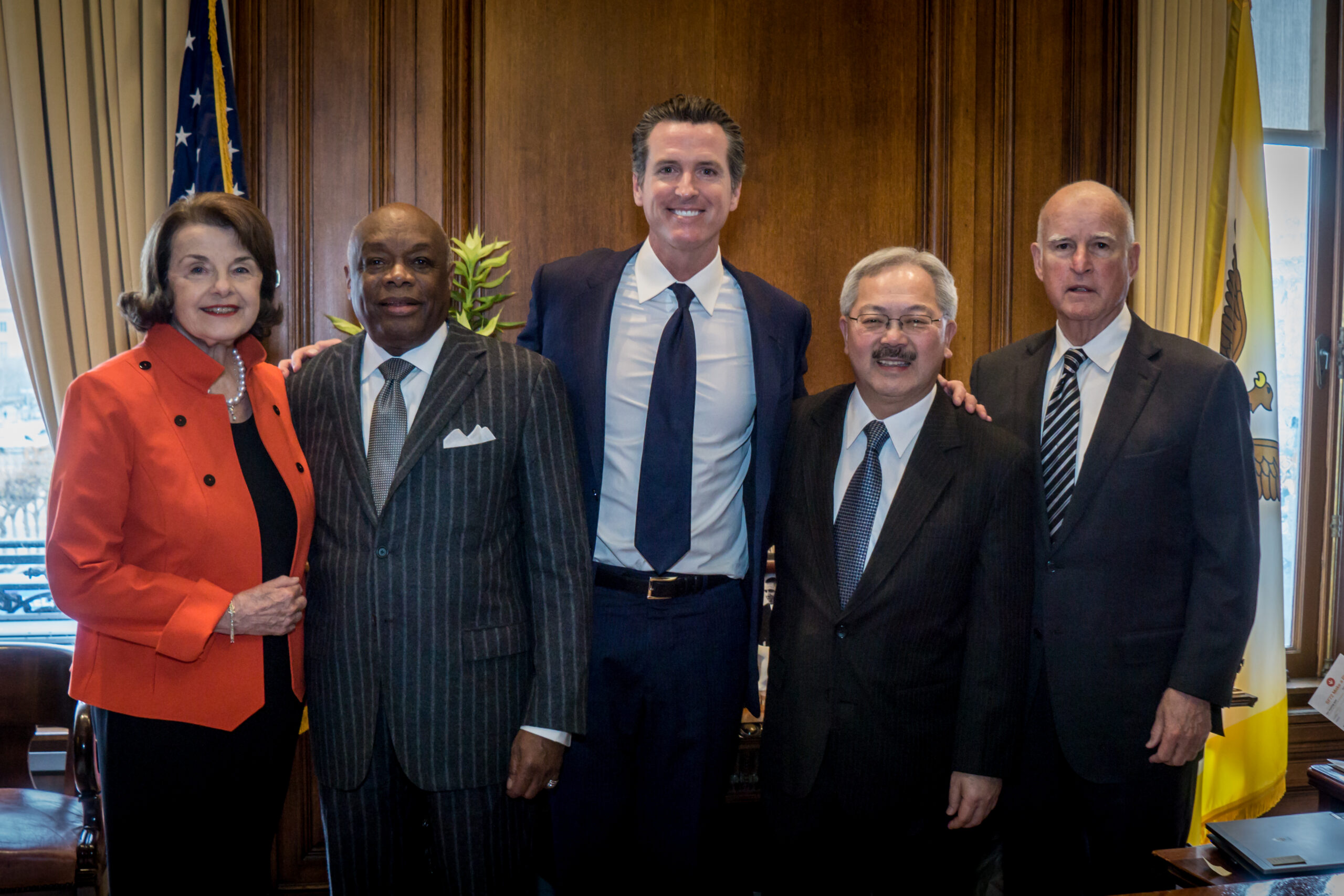
Four San Francisco mayors and a governor: Dianne Feinstein, Willie Brown, Gavin Newsom, Ed Lee and Gov. Jerry Brown
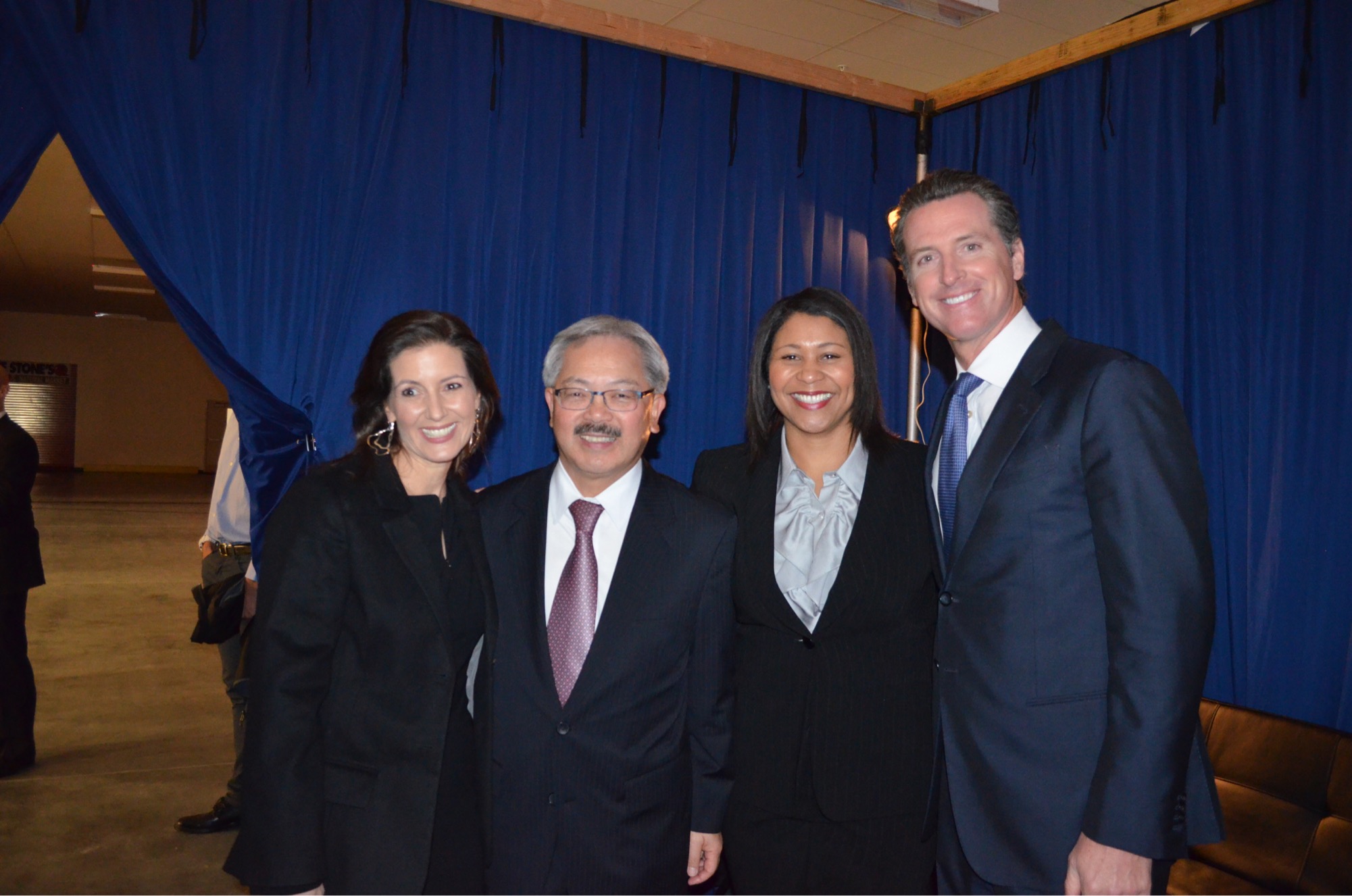
With Oakland Mayor Libby Schaaf, Board President London Breed and Gavin Newsom
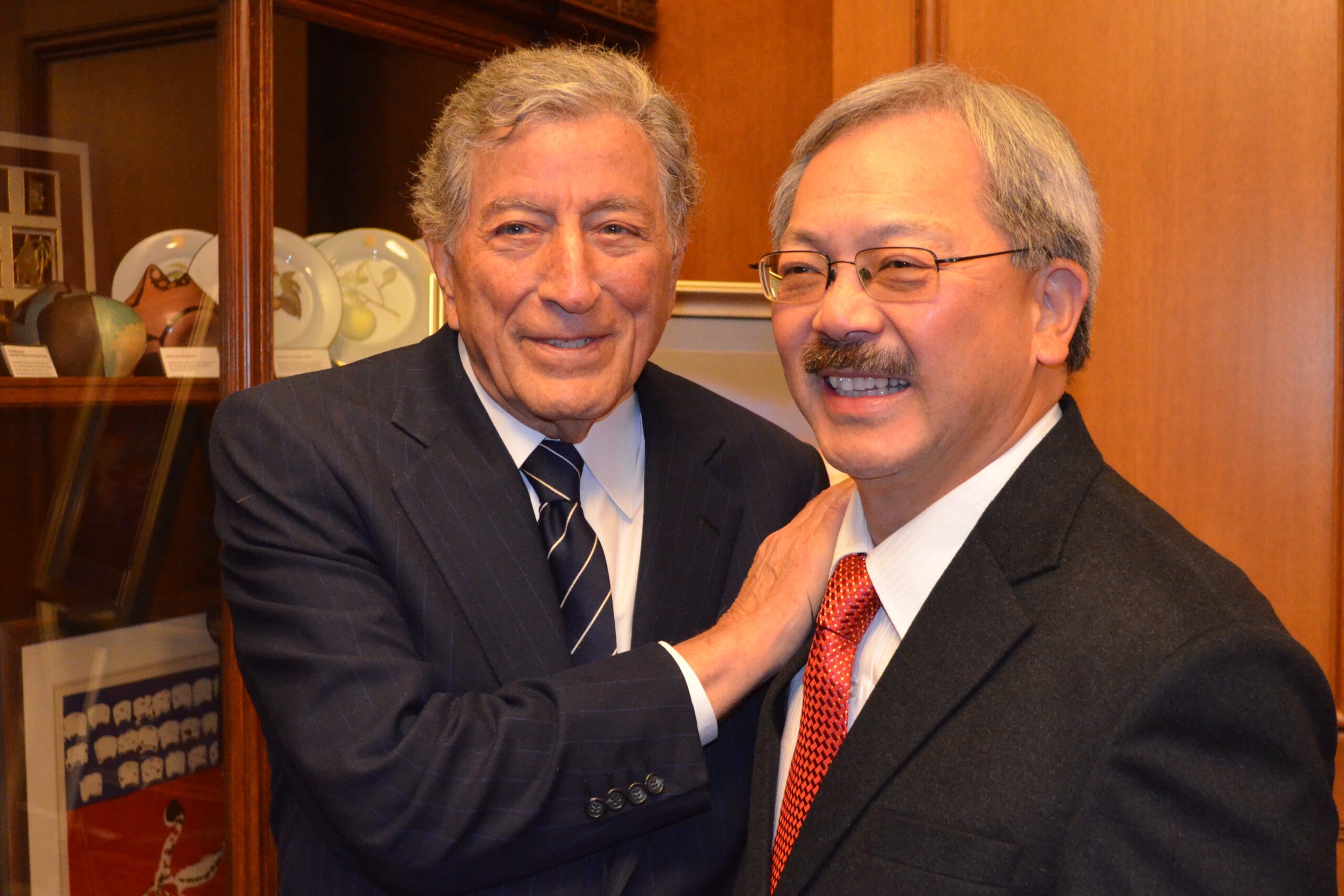
With Tony Bennett, who made “I Left My Heart in San Francisco” famous
Documentary
A documentary by Bay Area journalist and filmmaker Rick Quan.
January 11, 2011 · Starts at the oath, 19:34 into the 35-minute ceremony.
November 2013 · Lee honors five-year-old leukemia survivor Miles Scott after the city-wide BatKid event. Starts at 19:14 in the 42-minute video.
2014 State of the City address · Starts at the wage proposal, 20:45 into the 66-minute speech.
Lee and the Giants’ Lou Seal promote SF311, the city’s service for reporting problems and requesting help. One minute.
Chapter IV · 2017–today
Mayor Lee died suddenly on December 12, 2017, at age 65, while still in office.
Honoring Lee at City Hall, December 2025.
On December 12, 2025, the eighth anniversary of his death, San Francisco unveiled a bust of Mayor Lee in City Hall’s North Light Court. The Ed Lee Democratic Club helped organize the ceremony.
Inscription on the base of the City Hall bust
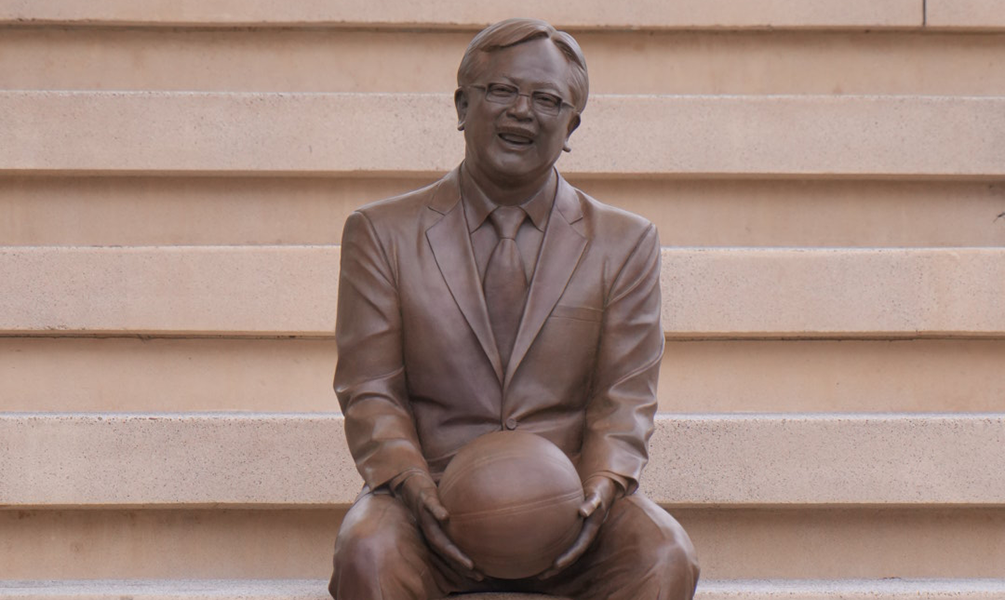
The Warriors’ statue of Lee at Thrive City, unveiled May 5, 2022.
The Edwin M. Lee Community Fund and the Ed Lee Memorial Fund have given out more than $800,000 for housing, immigrant communities, climate justice, and racial equity.
“I saw firsthand how genuine he was as a person. How hard he worked. And how deeply he cared for San Francisco. As our first Asian and first Chinese mayor, he opened doors and set an example for generations.”
Daniel Lurie
Mayor of San Francisco
At the unveiling of Lee’s bust, Dec. 12, 2025 · Read the post
“Mayor Lee reframed the affordable housing debate from a left progressive issue into motherhood and apple pie. Nowadays, there are few, if any, San Franciscans that don’t recognize the critical importance of affordable housing. Ed Lee did that.”
Malcolm Yeung
Chinatown Community Development Center
In Mayor Lee & the City He Loved (2019)
“He was the first mayor to attend the Trans March during LGBT Pride Month, and never forgot our most marginalized communities. His values reflected a City that were welcoming to all, particularly for those who were not welcome anywhere else.”
Cecilia Chung
Transgender Law Center
In Mayor Lee & the City He Loved (2019)
“He believed in delivering results, keeping promises, and expanding opportunity, especially for communities that had too often been overlooked.”
London Breed
Former Mayor of San Francisco
At the unveiling of Lee’s bust, Dec. 12, 2025 · Read the post
“Ed Lee was quite simply the most qualified person ever to serve as Mayor of San Francisco. He was an activist, an administrator, a leader and one of the most decent and caring men I’ve ever known.”
Willie L. Brown Jr.
Former Mayor of San Francisco
In Mayor Lee & the City He Loved (City & County of San Francisco, 2019)
“Though he assumed the role reluctantly at first, Ed Lee’s whole life and career prepared him to be Mayor of San Francisco. He governed in a time of great change and economic growth, but to his last day he remained an activist and an agitator when it came to expanding opportunity for everyone.”
Gavin Newsom
Governor of California, former Mayor of San Francisco
In Mayor Lee & the City He Loved (2019)
“History will remember Ed Lee not just for leading San Francisco out of the Great Recession, or that he was the City’s first Chinese-American Mayor, but for his kindness, his attention to the needs of all our neighborhoods, his lifelong devotion to public service and, perhaps most of all, his abiding love for our great city and its residents.”
Dianne Feinstein
U.S. Senator, former Mayor of San Francisco
In Mayor Lee & the City He Loved (2019)
“I worked closely with Mayor Lee, and proudly cast a vote at our Board of Supervisors to make him our first Asian American Mayor. As a community advocate, Mayor Lee never expected to become an elected official, and he exemplified humility, decency, and civility in his public service.”
David Chiu
San Francisco City Attorney
Eighth anniversary of Lee’s passing, Dec. 13, 2025 · Read the post
“I remember voting for Ed for Interim Mayor as a member of the Board of Supervisors all those years ago. Then and now his ascendency as Mayor is a point of pride for all of us in the Chinese community, the immigrant community and those [who] believe that anything is possible no matter from where you begin.”
Carmen Chu
San Francisco Assessor-Recorder at the dedication
At SFO’s dedication of its International Terminal Departures Hall in his name, Nov. 13, 2019 · Read the post
“Mayor Lee and I were honored to work at different times for the Asian Law Caucus, advancing civil rights and fighting for immigrant communities… San Francisco has lost one of its most dedicated servants.”
Phil Ting
Then-Assemblymember
Statement on Mayor Lee’s passing, Dec. 12, 2017 · Read the statement
“Mayor Ed Lee left us too soon at age 65. He was a humble, hard working man who dedicated his life to public service. He was a man-of-the-people and was beloved by all.”
Fiona Ma
California State Treasurer
At his passing, Dec. 12, 2017 · Read the post
“We join the city of San Francisco in mourning the sudden loss of Mayor Ed Lee, whose legacy as a champion of housing, civil rights and immigration issues, in particular, will not be forgotten.”
San Francisco Ballet
San Francisco performing arts institution
At his passing, Dec. 12, 2017 · Read the post
“…he was a good friend of our organization. Importantly, he was a historic figure in the City, becoming the first Asian-American Mayor in San Francisco history. This was no small feat given the history of the Chinese community in the City.”
California Historical Society
California history organization
On the day of his celebration of life at City Hall, Dec. 17, 2017 · Read the post
Much of this biography draws on Mayor Lee & the City He Loved (2019), compiled by former mayoral staff and city departments. It is an account of the administration’s work.
The reporting listed here offers additional perspectives; the wage, housing and shelter sections also link to historical public records.
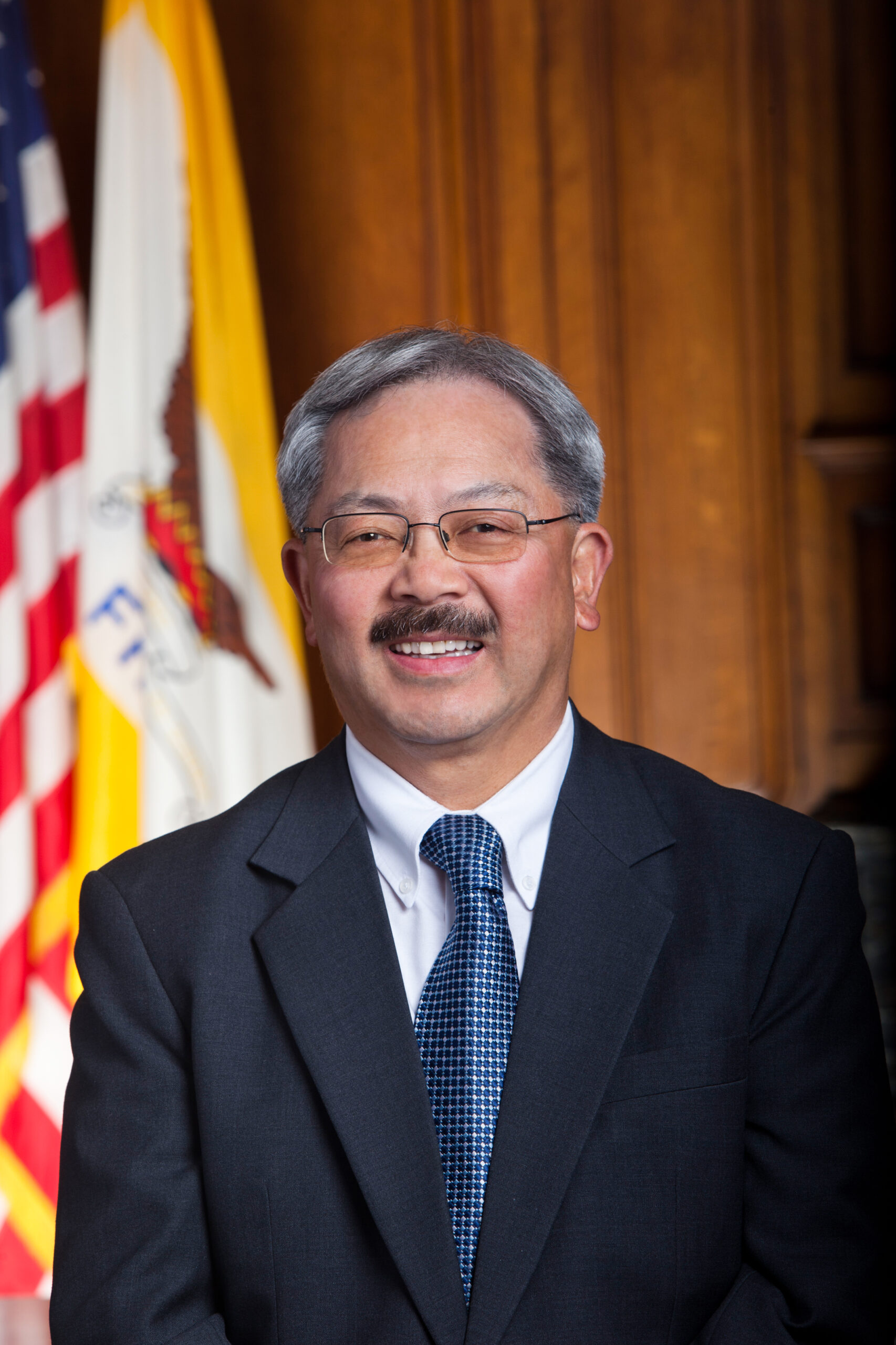
— Mayor Edwin M. Lee
Join Ed Lee Dems to take part in our work for Asian American representation and in San Francisco’s political life. You do not have to be Asian to join.